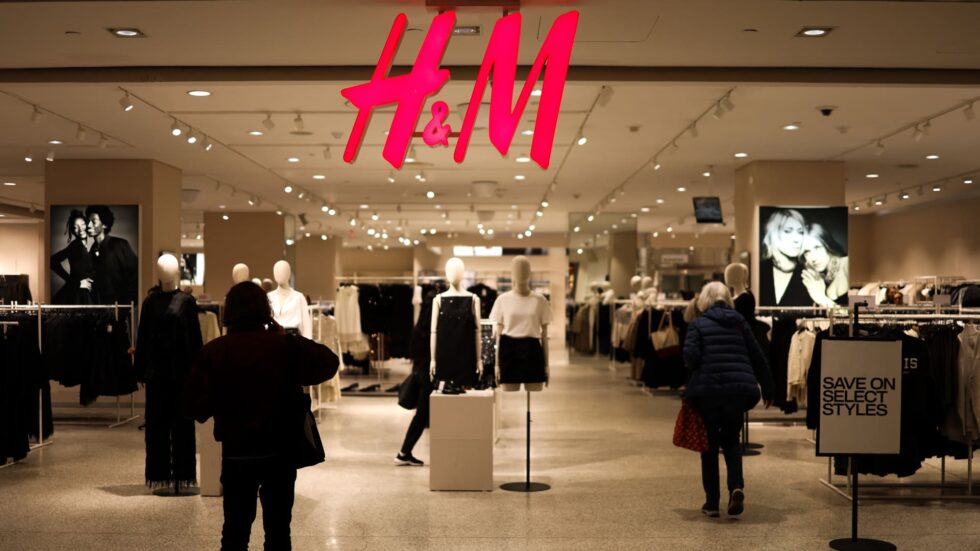
An H&M store in New York City on November 19, 2024.
Charly triballeau | AFP | Getty images
When Gilberto Louroiro spent summers working in a textile factory when he was a teenager who grew up in Portugal, he discovered that he felt “hate and love” for how clothes were produced.
The work was difficult: Loureiro’s work was to spend long days standing and observing fabric failures while running through machines at a speed of approximately 15 to 20 meters per minute.
“I really love the textile industry and problem solving, but I hate this … Inspection Worker and inefficiencies and waste. It is really one of the most difficult works in the world,” Loureiro told CNBC through Video Sil.
In the decade since he made his first change in the factory floor, Loureiro’s mentality changed. After obtaining a master’s degree in Physics, he co -founded from Smartex, a technology company that uses cameras, vision software and artificial intelligence to detect defects in the duration of textiles and, therefore, reduce the proportion of the fabric that is unleashed. Loureiro states that technology has prevented 1 million kilograms of fabric from being wasted in the last three years.
Waste in fashion
Fashion has a big waste problem, with approximately one clothing truck thrown and buried or burned every second, according to the Ellen MacArthur Foundation, a non -profit organization. Smartex states that its defect detection technology means that 0.37% more garments can occur per kilogram of finished fabric, which is added, if you consider that the Inditex fashion giant (owner of Zara) used 678,596 tons of raw materials in their products in 2024, according to its annual report.
In addition to that, fashion is an industry that has not yet adopted digitalization, said Loureiro, partly because it is so difficult to do. Making clothes is complicated because supply chains can be long and fragmented, from the growth and processing of raw materials, such as cotton, to textiles of tissue and dyed, designing patterns and sewing of fabric in clothing. At the same time, it is an industry of rapid movement and unpredictable.
“If this is the largest industry that has not yet been touched [the] Internet and is one of Larst’s pollutants in the world, and nobody is working on this in terms of technology [then] Here is a massive gap, “said Loureiro. About 20% of water pollution worldwide is caused by dyeing and the finish of textile production, according to the EU.
SMARTEX uses cameras and artificial intelligence to detect defects, since fabrics are woven.
Simple
This lack of technology in the production of clothing and the potential for the industry to become more efficient has made Smartex attractive to investors, Loureiro said. H&M group Inverted in smartex in 2022, while Tony Fadell, IPOD inventor and the Nest thermostat, directed an investment round of $ 24.7 million with Lightspeed Venture Partners in the same year. Smartex has raised more than $ 40 million to date, according to Loureiro, but given the complexity and operations of the industry in multiple countries, he said, investors are “brave” to support it. “There is a great value to capture. So that is a great risk, to be a reward,” he added, given the size of the industry, which is estimated to be more than $ 1.8 billion in 2025.
SMARTEX and their high profile investors caught the attention of AmazonHe has also put money in the company through his AWS computer for Climate Felowship, an initiative that supports new technological companies in areas such as food security, conservation and climate resistance. Lisbeth Kaufman, Head of Climate Technology Business Development, New Companies and Risk Capital on AWS, launched the scholarship in 2023, with four companies winning a place in the program.
“Climate technology startups, they have so much R&D [research and development] that they must do … maybe even more than … Standard technology companies, they have to invent a new science or a new technology, as well as new business models, “Kaufman told CNBC through video calls. A AWS TEWS TEWS TEZ ADVANCED TEZ ADVANCED YOU ADVANCEDE TE ADVANCE TE ADVANCE ADVANCED YOU ADVANCED WAR Totancos totos totes totancados.
Recovery time
Loureiro spends much of his time visiting textile factories, mainly in Asian countries such as Bangladesh and Vietnam, where he finds the owners of factories anxious to understand how quickly an investment in smartex will pay.
“If in 30 seconds you are not convinced about the ROI [return on investment] The recovery of recovery, in less than a year, for example, is out of the game … we need to show them that they will save on materials, courses or electricity, “Loureiro said. The majority of the owners of factories who are recorded that” a few hundred thousand dollars “in the pan period” are recorded. “We need the savings to be much larger than the cost.” According to the Institute for the Impact of Clothes.
The objective of Smartex is to become an “operating system” for factories throughout the fashion supply chain so that brands can track information, such as where the garments come from, where they are in the production process and how much water is dedicated to producing items. “These are basic questions that are very difficult or impossible to answer for most fashion brands,” Loureiro said.
Fadell has compared smartex potential for AppleThe software ecosystem, Loureiro said. “It is not about the computer, the Mac or the iPhone or the AirPods, it is what they can do together, creates an ecosystem, a layer in the upper part that becomes much more valuable.”