London didn’t have a calm Saturday. The city felt heavy, like you could feel it even before going outside. Near Westminster, streets were blocked off. Police vans lined up, and officers stood ready in bright jackets. Something was starting.
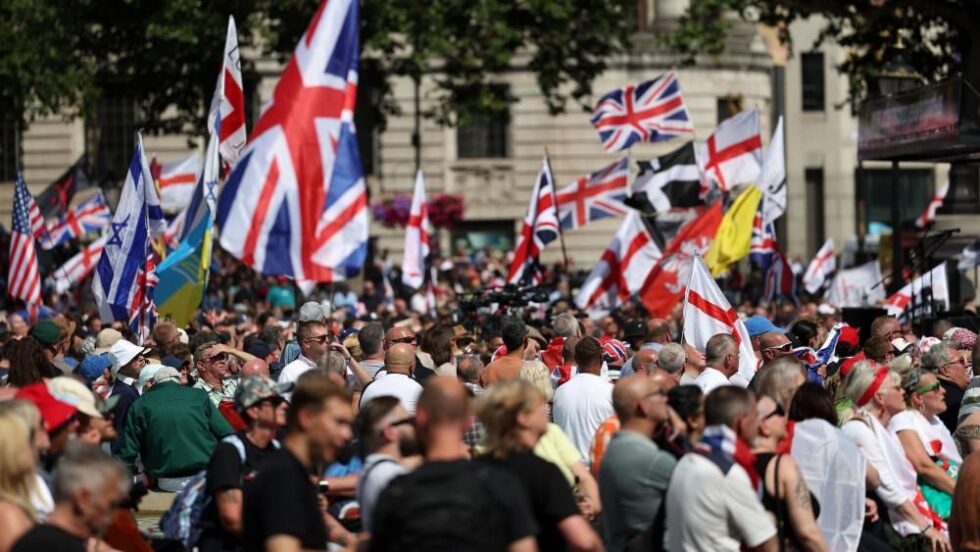
It was Tommy Robinson’s march. He called it Unite the Kingdom, which sounds big and harmless. But Robinson isn’t harmless. He’s been stirring up feelings for years; some see him as honest, others as divisive. This time, he wanted a rally for free speech. Thousands of his supporters showed up with flags and chants.
But London won’t let him have the stage all to himself. It never has, and it never will. The counter-protesters showed up, too. Students, union members, anti-racist groups, and everyday Londoners. They held their own signs and shouted their own messages: No to hate.
It wasn’t just two groups marching. It was two ideas of what Britain should be like. Robinson’s people were loud, talking about patriotism and free speech. The others were just as set on their message, talking about equality and unity. Their voices crashed over Westminster Bridge, echoing through the city.
The march route wasn’t random. Starting from Stamford Street, across York Road, onto Westminster Bridge, and finishing at Whitehall, it went right through the country’s political center. Past Parliament, past historical places, and past the places where important decisions are made. Everyone there knew it was more than just a walk; it was a statement. There were police everywhere because they had to be. Barriers, officers on horseback, and vans parked like walls. You could tell they weren’t just watching an event; they were holding a line. A shaky one. London has seen protests get out of hand before. No one wanted that to happen again.
ukEven so, things got tense. Groups got past barriers. There was pushing, shouting, and threats of violence. People got arrested, but not enough to call it a riot. Still, it left a mark on the day. Social media made things worse, or maybe just wider. Videos of the marches spread really fast. Hashtags fought for attention. Robinson’s supporters called it a win for patriots. His critics called it dangerous and bad. Online, it felt like the streets had jumped onto everyone’s phones.
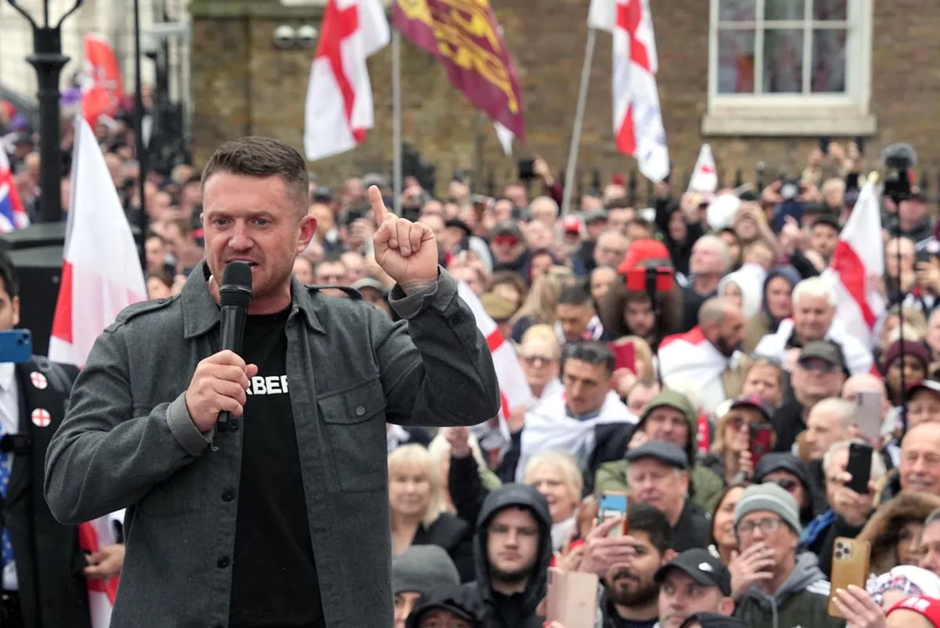
What makes this worse is the timing. Britain feels split right now, and not just about politics. It’s about identity, culture, and what the future looks like. For some, Robinson’s march spoke to anger they’ve felt for years anger at being ignored. For others, it brought up fears of hate, exclusion, and how fast words can turn into violence. That’s why the counter-protest was important. People showed up not just to shout at Robinson’s crowd but to show that London is for everyone. It’s not just about one voice or one idea. Still, walking away from Westminster, it was hard not to feel uneasy. The chants were still echoing. The signs were still in your head. The faces angry, passionate, desperate stuck with you. For a few hours, London didn’t feel like one city; it felt like two.
By night, the streets cleared. Barriers came down. Police left, and the tourists came back. Life went back to normal, like it always does in London. But the arguments didn’t end, and they don’t just go away. They’re waiting for the next rally, the next march, the next time the country’s splits spill back into the streets. Tommy Robinson will say he won, and his opponents will say the same. Maybe both sides won in their own ways, but London lost a bit, too. When a city has to turn into a fortress just for two groups to shout at each other, something is wrong.
Saturday wasn’t just a protest. It was like a mirror, showing Britain just how divided it is.