It’s another sad story from the English Channel. Four people are gone. Two of them children. A woman who survived the crossing later died in a UK hospital. On a map, the Channel looks small. Just a strip of water, about 20 miles wide at its narrowest point. But for people trying to reach the UK, it’s become one of the most dangerous routes in Europe. Every attempt carries risk. And once again, this one ended in tragedy.
What Happened?
The deaths happened off the coast of France in two separate incidents.
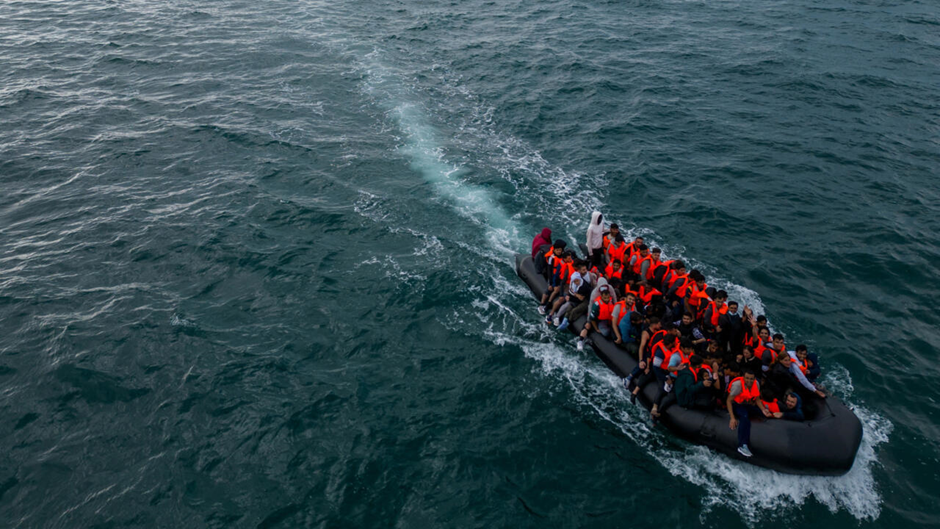
In the first, a small dinghy carrying about 38 people ran into trouble near Sangatte. It was overcrowded and never built for the sea. Families still climbed aboard, believing it was their only way forward. The second incident involved a larger vessel, holding over 100 passengers, that struggled near Neuchâtel-Hardelot. It too was unsafe. Too many people. Not enough life jackets. Not enough hope if something went wrong. French rescue teams responded quickly. Coastguards launched boats into the waves. Helicopters scanned the dark waters. Dozens of people were saved. But not all. Two children drowned. A woman who had been rescued died later in a hospital. At least three others remain missing. Think about it for a moment. The dark water. Screams carried by the wind. Families holding on to each other in the cold. And then silence, as the Channel claimed more lives.
Why Do They Risk It?
The question comes up every time. Why get on those boats? Why risk children in waters so dangerous?
The answer is never easy. But one word sums it up desperation. More than 30,000 people have tried to cross the Channel this year. They come from places like Afghanistan, Sudan, Syria, Eritrea. Countries where war, persecution, and poverty leave no real future. Some are parents clutching babies. Some are teenagers traveling alone. All are searching for the same thing: safety. But safe routes to the UK are rare. Family reunification programs have been scaled back. Legal asylum options are hard to access. With doors closing, many feel they have no choice but to turn to smugglers. Smugglers promise hope. They charge thousands. They pack flimsy boats with too many people. And when things go wrong, they vanish. The UK government blames them. And yes, they share blame. But pointing the finger doesn’t stop families from drowning.
Politics in the Middle
Every time tragedy strikes, politicians start arguing. London blames Paris. Paris blames London. Europe debates. But the boats don’t stop. The UK’s latest deal with France the so-called “one in, one out” arrangement limits arrivals and puts family reunions on hold. Ministers call it tough but necessary. Aid groups argue it only makes crossings more dangerous. France says it’s doing more patrols and stopping more boats. Critics argue that this just pushes migrants to riskier starting points. Longer journeys. Rougher seas. While leaders trade words, families keep boarding unsafe boats. And the Channel keeps taking lives.
Beyond the Numbers
It’s easy to focus on the statistics. Thirty thousand crossings. Four deaths. Two children.
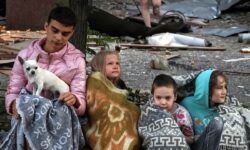
But these are not numbers. They are people. Kids whose names we may never know. Parents who risked everything for their children’s futures. Families who fled war only to face the sea. In northern France and southern England, the crisis feels real. Locals watch coastguards bring survivors ashore. They hear sirens in the night. They see children wrapped in silver blankets, shaking from cold and fear. This isn’t just politics. It’s human.
What Aid Groups Say
Charities and humanitarian groups are demanding safer, legal routes. They argue that if people could apply for asylum in the UK without risking their lives at sea, smugglers would lose their power. Parents wouldn’t feel forced to gamble with their children’s lives. The government sees it differently. Officials warn that opening legal routes would attract even more arrivals. “We can’t reward illegal crossings,” one minister said. And so, the argument repeats. Compassion versus deterrence. Safety versus control. Meanwhile, the Channel keeps claiming lives.
A Wider Issue
It’s tempting to see this as only a UK problem. But it isn’t.
Migrants don’t just appear on the French coast. They’ve already traveled through deserts, refugee camps, and war zones. The Channel is simply the last, most desperate step. And the pattern is global. In the Mediterranean, boats sink near Italy and Greece. At the U.S.–Mexico border, families risk rivers and deserts. Wherever there is desperation, there are dangerous crossings. The Channel is Britain’s version of a worldwide problem.
In the End
This week, four more lives were lost to the Channel. Two children who will never know the futures their parents hoped for. A woman who survived the water but not the aftermath. And others are still missing. The politics will continue. Governments will argue. Aid groups will demand change. Smugglers will keep profiting. And families, desperate as ever, will keep trying. Because when home means danger, even a freezing sea looks like hope. Until governments provide real solutions and safe routes exist, the Channel will remain what it is today. A path to safety for some. And for far too many others, a graveyard.